Reviewed 2026-09-30 · Hospitality Tech Guide · Restaurant and cafe operators
A loyalty program only pays off if it brings people back more often than the rewards cost you. For a cafe, the simplest mechanic — a digital or paper punch card — is a manageable place to start. This guide covers choosing a mechanic that fits your margins and knowing when a free approach is enough.
Quick start
- Pick one simple mechanic: a buy-10-get-1 punch card, a points balance, or cashback.
- Set a reward whose cost fits comfortably inside your food and labor margins.
- Promote it at the counter, on receipts, and on social media.
- Track repeat visits, not just card signups.
Choose a mechanic that fits the math
Work backward from what you can afford to give away. For a "buy 10, get 1 free" card, account for the ingredient, packaging and additional service cost of the free drink alongside the contribution from the ten paid purchases. Decide whether that reward is affordable using your own costs. Points and cashback feel more flexible but are harder for customers to grasp at a glance and harder for you to forecast. Start simple; you can add tiers later once you see what customers actually respond to.
Promote it where customers already are
- At the counter: ask every guest if they want to join; give staff a one-sentence explanation that matches the sign.
- On receipts: a short line with a signup link or code.
- On social media: a photo of the reward with a clear "here's how it works" caption.
When a paper or manual card is enough
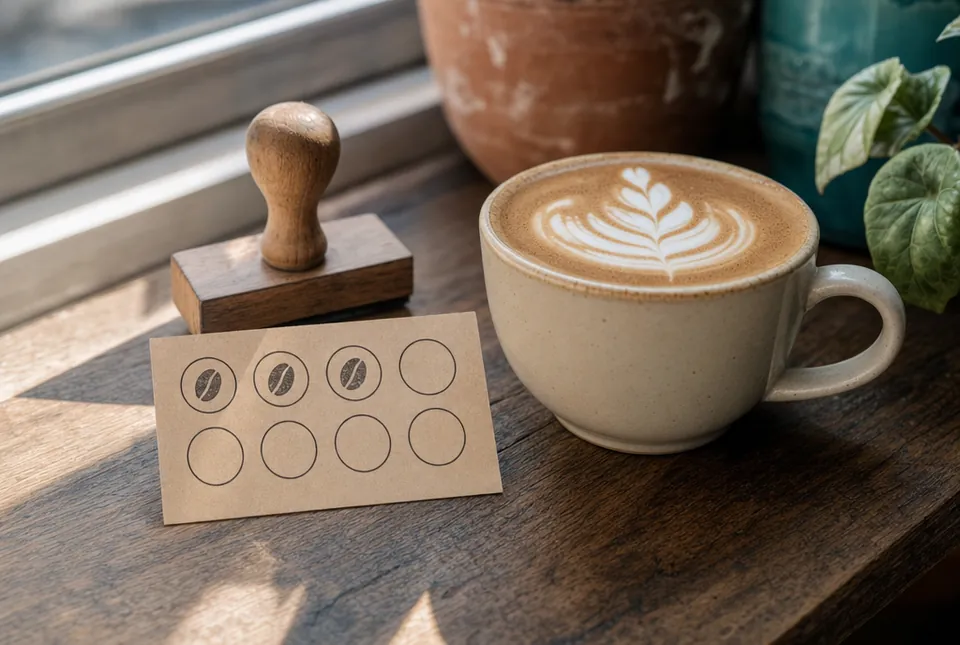
A physical punch card or a simple stamp costs almost nothing and works fine for a single-location cafe with steady staff and a modest regular base. A spreadsheet can track names and visits at very small scale. You only outgrow this when you want automated reminders, push notifications, or a card that lives in the customer's phone wallet.
When a digital tool becomes worth evaluating
If you want reminders, digital wallet cards, or several card types run from one place, evaluate a platform. One option we researched, Boomerangme, lists digital loyalty-card options and push notifications, with a 14-day trial advertised on its pricing page. Check which card types and messaging features are included in the plan you are evaluating. It is a paid platform aimed at loyalty and engagement, so weigh the monthly cost against the repeat visits you expect it to recover — treat it as a researched option to test, not a default purchase.
Realistic limits
- A loyalty program can't fix inconsistent quality or slow service; it amplifies what's already working.
- Discounts and free items come straight out of margin — size the reward yourself rather than copying a competitor's.
- Signups are vanity; measure how many enrolled guests actually return more often.
Keep the reward easy to explain
Consider an espresso bar choosing between points and a simple stamp card. The owner starts with one stamp per eligible drink and a free drink after nine paid purchases. Staff can explain the rule in a sentence. The owner records the cost of redeemed drinks and compares visit frequency before and after enrollment, while remembering that frequent visitors may be the first people to join. A pastry bought alongside a free coffee is welcome, but it does not make the coffee’s cost disappear. The decision to go digital comes later, if lost cards and administration become a real problem.
Closing checklist
- One mechanic chosen with the reward cost worked out.
- Staff know the one-line pitch for joining.
- Signup prompt visible at the counter and on receipts.
- A way to record redemptions and repeat visits.
- Review after a month: are enrolled guests returning more often than before?
Sources
Continue with a related task
Browse the practical guide library or check your costs with a free calculator.